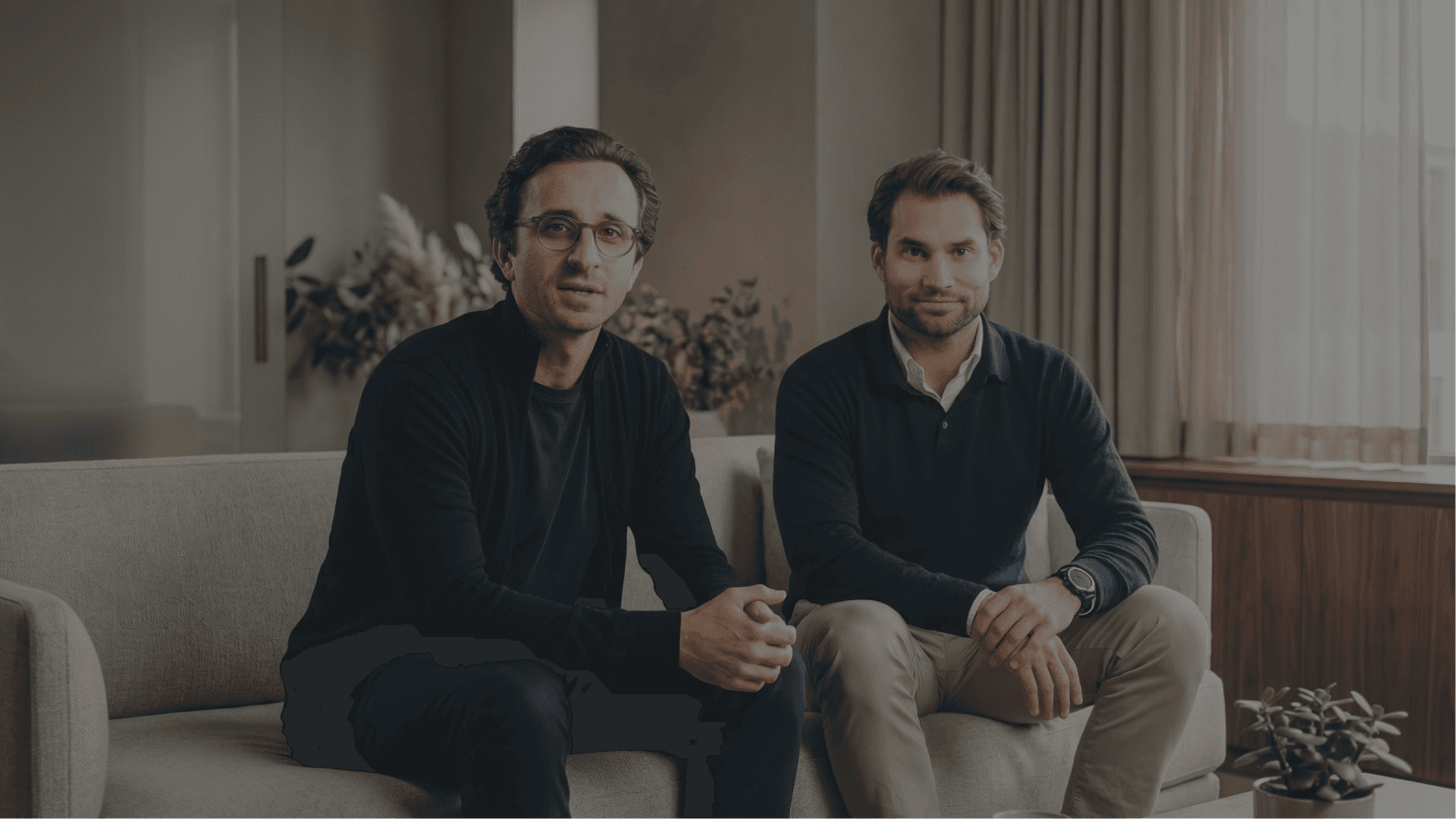
"We are building the technology inside the tac advisory, not alongside it" — Interview with Chris Dansard, CTO of Limetax
Chris Dansard is CTO of Limetax. He has a master’s degree from TU Munich and has spent many years working as a developer in regulated fintech environments, at a digital asset manager and a crypto bank. At Limetax, he is responsible for the group’s entire technological development: LimetaxOS, the Limetax app and the AI infrastructure. In the interview, he explains why Limetax does not rely on existing tools, but instead is building its own platform.
Technology
Chris, you are building your own technology platform for tax advisory. Why?
Between what AI can do today and what actually reaches day-to-day life in a firm, there is a big gap. Many groups try to close this gap with standardization: collecting proven tools, defining best practices, rolling them out across all firms. That brings order, but it does not solve the actual problem. In the end, you have a client portal here, task management there, and an AI tool for document processing as well. Each works on its own, but nothing talks to anything else. The employee jumps between five interfaces and loses exactly the time the tools were supposed to save.
External software will not close this gap. It requires direct access to data, processes, and employees. That is why we are building our own platform.
How is the architecture structured?
Three layers. At the bottom is DATEV. That remains the system of record. Bookings happen in Kanzlei-Rechnungswesen, tax returns go out through DATEV, client master data is stored in DATEV. We are not changing that. More than 90 percent of German firms work with it; the entire regulatory infrastructure is aligned with it.
Above that sits LimetaxOS. That is our data layer that connects everything: DATEV data, firm information, client history. LimetaxOS aggregates this data in real time and makes it usable for our applications. Without this layer, every AI application lacks context. A language model that cannot access client history cannot make good booking suggestions. LimetaxOS solves this problem.
At the top is the Limetax App. That is the work layer that the firm employee opens every day. Chat and research, tools for specific tasks, and AI agents that automate workflows. All in one application, no switching between programs.
What changes concretely in accounting?
Document processing is the area where AI today makes the biggest measurable difference. We use Large Language Models to semantically understand documents. This goes beyond OCR recognition; it is actual reading and interpreting. And it goes beyond what the DATEV automation services do today, which are based on historical pattern matching.
The difference shows up in complex cases. Distinguishing an advance invoice from a final invoice, correctly classifying an unusual remittance information on the bank statement, recognizing that a matter must be treated differently for tax purposes than it appears at first glance. With pure pattern matching, that is hard to solve. With semantic understanding and the context from LimetaxOS, i.e. the client history, previous bookings, and the industry, it becomes possible.
But fully automated postings are only the beginning. After that come the questions that cannot be answered deterministically: Is the cost structure plausible? Should a provision be recognized? Has the tax treatment of a matter changed because of a recent BMF letter? This requires professional judgment. AI can support, flag anomalies, point out deviations. But the human makes the decision.
What can the chat do, and who is it for?
The chat is intended for everyone in the firm, from staff accountant to professional partner. It is our interface for the technical questions that constantly come up in day-to-day work. What is the current status of the property tax reform? How do I treat a specific matter for VAT purposes? What changed as a result of the latest BMF letter?
Today employees google such questions, read specialist articles, ask a colleague, or look in LEXinform. That costs five to fifteen minutes per question. Our chat answers these questions immediately, with source references and in the context of firm work. It accesses the technical knowledge base via LimetaxOS and knows the firm context. This is not a generic chatbot.
Moreover, the chat becomes the starting point for many operational questions. "Which clients have not yet submitted documents for the annual financial statements?" should not lead someone to go through a list. It should produce an answer.
And the agents?
Agents go one step further. The chat answers questions. Agents complete tasks. One agent can review an assessment notice and flag deviations. Another can compile a briefing before a client meeting, with the current figures, open items, and relevant developments.
The key point is: the final decision always rests with the human. Agents automate processes, not decisions. Approval is granted by the staff accountant or professional partner.
You worked in regulated fintech environments before Limetax. What do you take from there?
At an asset manager and a bank, you learn how to build software that does not bolt regulatory requirements on afterward, but thinks about them from the start. Tax advisory is similar in this respect: confidentiality obligations, reserved activities, data protection. Client data does not leave our infrastructure uncontrollably. AI models work on data whose processing is permitted under professional regulations. And for every process, we can trace which data flowed where and when.
How do you ensure that employees in the firms accept it?
Tax advisors and tax professionals have been promised a lot in recent years. Tools that were supposed to make everything better and then only created additional work. That is why one of our most important principles is: minimally invasive.
We are not introducing a completely new system and expecting everyone to relearn everything immediately. The Limetax App is introduced alongside the existing DATEV workstation, step by step. If someone notices that a research question is answered in seconds instead of ten minutes, or that a briefing is ready instead of having to be assembled manually, acceptance comes on its own.
We build with the firms, alongside the employees. The best feature ideas come from staff accountants who know exactly where time is being lost in the process.
If you look three years ahead: what changes?
A staff accountant opens the Limetax App in the morning and sees their clients prioritized by urgency. The day's documents have been pre-processed by agents, posting suggestions are available. They review, correct where necessary, and approve. Queries to clients go out automatically. The advisor has an AI-generated briefing before every meeting. Team leadership sees bottlenecks in real time.
That may not sound spectacular. But the difference compared with today is enormous. Today, a firm employee spends a significant part of their time searching, following up, and compiling information. If we reduce that to a minimum, the team can focus on what actually creates value: technical review, tax advisory, client support.
For that, we are building LimetaxOS and the Limetax App. A product that is already running in our firms today and getting better every day.
Tax advisory, the way it should be.
Location
Zionskirchstr. 73 A
10119 Berlin
Phone